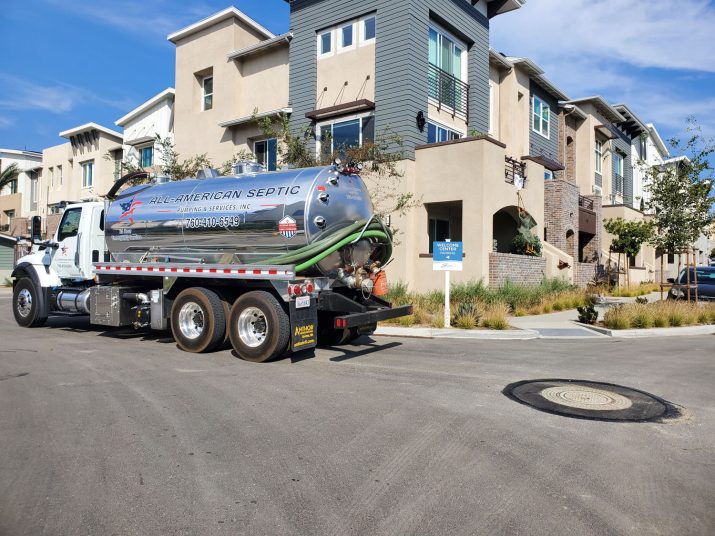
What should I look for in a commercial septic pumping company?
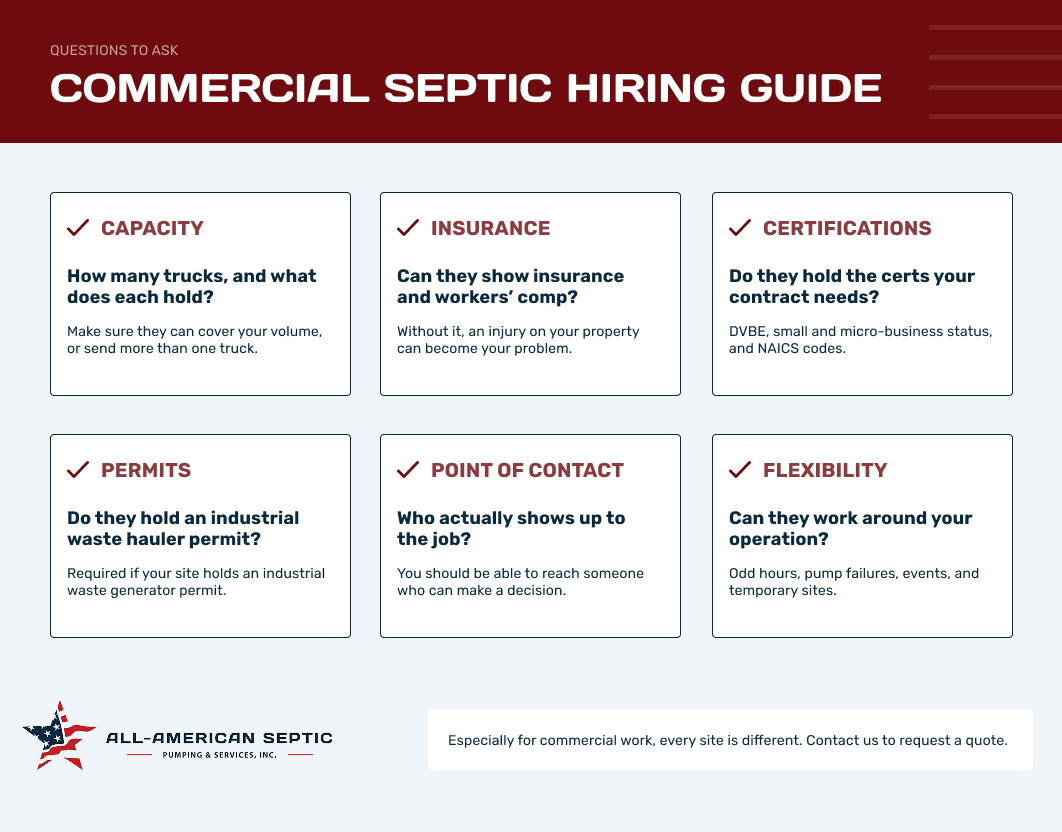
Start with a few basic checks: capacity, permits, insurance, emissions compliance, and any certifications your contract requires. Those tell you whether a commercial septic pumping company can legally and physically do the job. Reliability and communication tell you whether they’ll keep doing it well.
Most businesses don’t go looking for a new pumper until their current one lets them down. A missed pickup, a slow response during a pump failure, or a vague answer about what you’re being billed for are all signs it’s time to compare options.
Can they handle your volume?
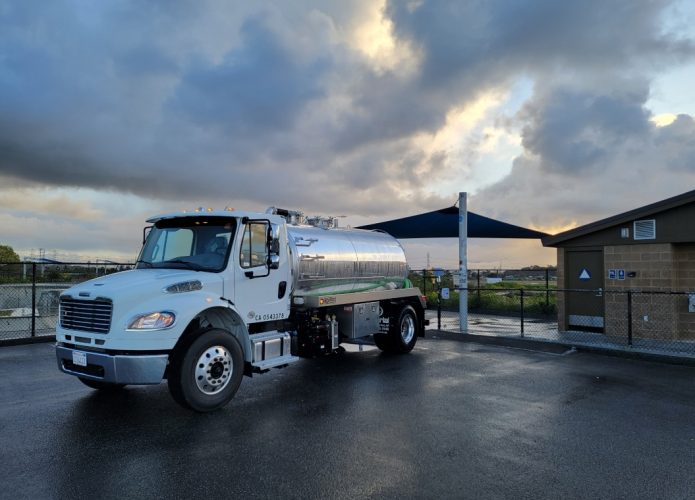
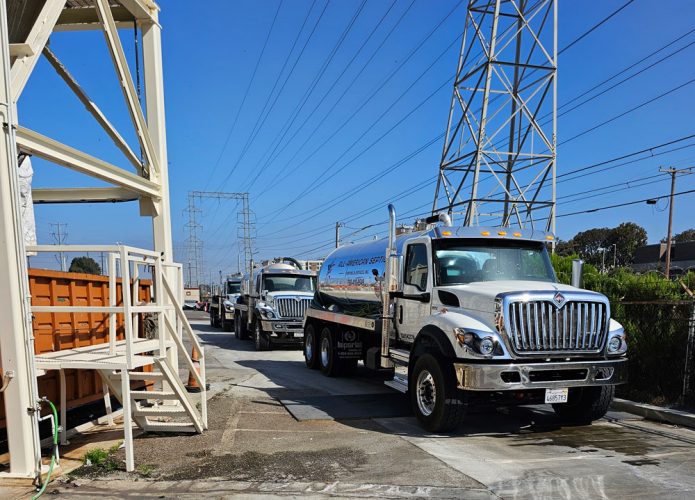
Ask how many trucks they run, what each one holds, and whether they can send more than one truck to the same job when needed.
A company with one truck may struggle to cover a large site or a tight deadline. A very large operation may not give your account much attention. Ask about gallons-per-day capacity if your site generates waste on a steady schedule.
How we answer it: We run a fleet of 6 trucks, including a tanker trailer, with varying capacities for any-sized job. That means we can send multiple trucks when a job calls for it. We’re mid-sized on purpose, too; we’re big enough to handle large sites but small enough that you’ll talk to an owner when you need to.
Are they permitted to haul your type of waste?
If your site is industrial, ask for the company’s industrial waste hauler permit number before work begins. Not every septic company has one.
Are they properly insured?
Ask for proof of general liability coverage and workers’ compensation insurance. A company working on your property without workers’ comp can leave you exposed if someone gets hurt on the job.
How we answer it: We carry the right insurance as well as workers’ compensation coverage and can provide certificates on request.
Do their trucks meet California emissions requirements?
California sets emissions rules for commercial trucks, and many government agencies and large contractors require vendors to comply.
If you’re bidding public work or answering to a corporate vendor policy, this is often a required checkbox.
How we answer it: Our trucks meet California emissions requirements.
Do they hold the certifications your contract requires?
If you’re a prime contractor on state or government work, you may need subcontractors with specific certifications to meet participation goals. Ask about Disabled Veteran Business Enterprise (DVBE), small business, and micro-business status, along with the vendor’s NAICS codes.
Who actually shows up to the job?
Ask who your point of contact will be, and who will be on site. At larger companies, your account may run through a dispatcher and a rotating crew. That can make it hard to get a straight answer or a quick change of plans.
How we answer it: We’re
family-owned and operated. Our owner, Mathew, is on our job sites, so you’re never more than one call from the person who can make a decision.
Can they work around your operation?
Commercial needs rarely fit a standard schedule. Ask whether the company can work odd hours, respond quickly to a pump failure, and support temporary or event-based needs.
Common situations we see around San Diego County include:
- Pump failures: Many commercial systems rely on in-line pumps, and when one fails, you need service right away.
- Growth: A new hotel wing, more staff, or more visitors can push a system past what it was built for.
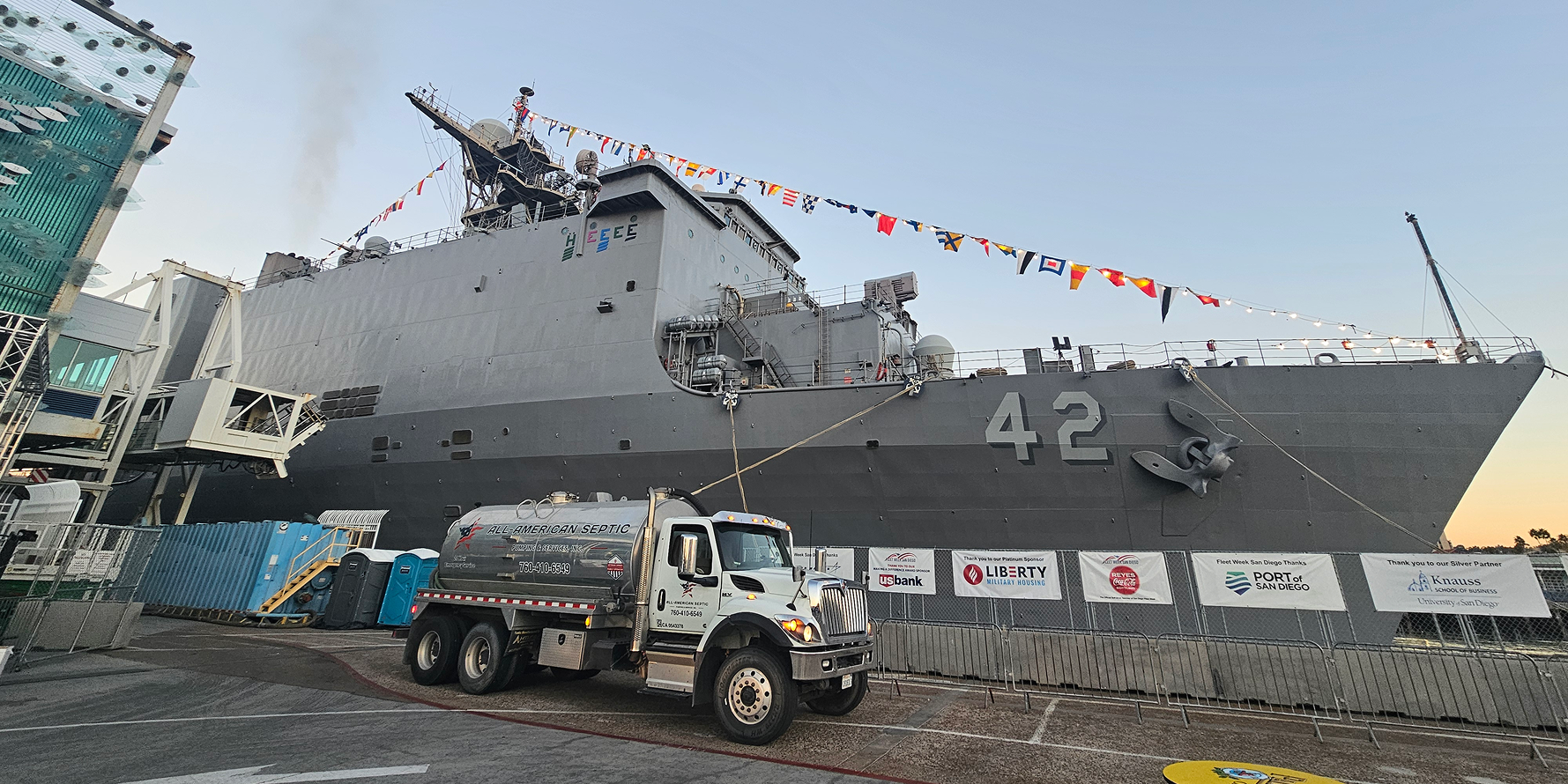
- Events: Large events need pumping during and after, not just before.
- Temporary sites: Construction and other temporary projects often need ongoing service for restroom trailers. (Servicing through the trailer rental company can cost more than hiring a pumper directly.)
How we answer it: We work flexible hours and plan around your operation, not ours.
What should make you think twice?
Watch for a commercial septic company that:
- Misses scheduled pickups or is hard to reach when something goes wrong.
- Adds unnecessary repairs or extras to the bill. (This is especially common when the pumper also sells repair and contracting work.)
- Can’t clearly tell you what it doesn’t do.